Introduction
Proper lighting in sports arenas is crucial. It affects player performance, spectator experience, and broadcast quality. As traditional lights like halogen and metal halide are phased out, LED arena lights are becoming the go-to option. In this article, we’ll explore why LED arena lights are a game-changer and how to choose the best ones for your venue.
Key Factors to Consider When Choosing LED Arena Lights
Understanding Your Lighting Requirements
Before choosing the best LED arena lights, it’s essential to understand your venue’s specific lighting needs. Different types of events and sports require varying lighting levels to ensure optimal performance. For example, professional sports such as football or soccer demand high illumination levels (1000-2000 lux), whereas recreational or training facilities may require less intensity (500 lux). Uniform lighting is also crucial. Areas with poor light distribution can create shadows or dark spots, which negatively affect both athletes and spectators.
For indoor arenas like basketball courts, glare-free lighting is particularly important. High-glare lighting can distract players and hinder visibility. Thus, it’s crucial to choose fixtures with anti-glare technology to ensure safe and comfortable conditions.
Key Technical Specifications of LED Arena Lights
When selecting LED arena lights, technical specifications play a major role in determining the performance of your lighting system. The first specification to consider is lumen output. The brightness of the lights, measured in lumens, is more important than wattage alone. A higher lumen output ensures better visibility without consuming excess energy.
Another important factor is the beam angle. The beam angle determines how the light is distributed across the arena. For large outdoor venues, narrow beam angles (15°-30°) are ideal for focusing light on long distances, such as the middle of a football field. In contrast, wider beam angles (60°-90°) are suitable for indoor arenas, where the lighting needs to cover the entire playing area evenly.
Finally, consider the durability and environmental resistance of the lights. LED arena lights must be able to withstand harsh weather conditions, especially in outdoor venues. Ensure that the lights have an IP rating of at least IP65 to ensure they are waterproof and dustproof. For colder climates, check that the lights can operate in temperatures as low as -30°C.
Feature | LED Arena Lights | Traditional Lighting (Metal Halide/ Halogen) |
Energy Efficiency | 75% more efficient | Less efficient |
Lifespan | 50,000 to 100,000 hours | 15,000 to 20,000 hours |
Maintenance Costs | Low (minimal replacements) | High (frequent bulb replacements) |
Brightness (Lumens) | High, customizable | Varies, often less consistent |
Initial Investment | Higher upfront cost | Lower upfront cost |
Energy Efficiency and Cost Savings
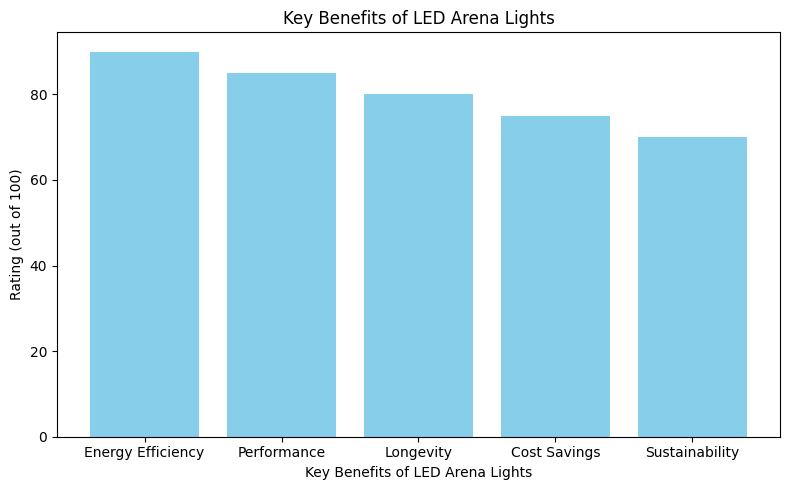
One of the main advantages of LED arena lights over traditional lighting is their energy efficiency. LED lights consume significantly less energy, which reduces both operating costs and environmental impact. Additionally, LED fixtures have a longer lifespan, lasting up to 50,000 hours or more, which cuts down on maintenance costs and the frequency of replacements.
LED lights also offer smart controls for energy optimization. Features like dimming and motion sensors allow you to adjust the lighting based on the time of day or the type of event, further reducing energy consumption during non-event hours.
Although LED lights require a higher initial investment compared to traditional lighting, the savings on energy and maintenance costs lead to a quick return on investment (ROI). Over time, the cost savings from lower energy bills and fewer replacements will offset the higher upfront cost.
Benefits of LED Arena Lights
Performance Benefits of LED Arena Lights
The performance advantages of LED arena lights are significant. Enhanced player performance is one of the primary reasons stadiums choose LED lights. These lights ensure uniform brightness, which helps athletes perform without the distraction of shadows or uneven light. For instance, in football or soccer, proper lighting ensures that players can track the ball easily across the field, regardless of the time of day.
For spectators, LED arena lights offer a better viewing experience. They provide bright, clear lighting without the flicker associated with older technologies, making the game more enjoyable to watch. The consistent, uniform illumination also ensures that spectators in different sections of the venue can see the action clearly.
For events that are televised, LED lights provide improved broadcasting quality. The flicker-free operation of LED lights ensures that the broadcast is clear and sharp, even in slow-motion replays. The high color rendering index (CRI) of LED lights also helps capture colors more accurately, improving the visual appeal of the broadcast.
Environmental Impact and Sustainability
Another significant advantage of LED arena lights is their positive environmental impact. LED lights consume less energy, resulting in a reduced carbon footprint. Additionally, LEDs contain no hazardous materials, unlike some traditional lighting technologies, which often use mercury. This makes LEDs an environmentally-friendly option for sports venues looking to improve sustainability.
LED lights also have a long lifespan, which contributes to reducing waste. Less frequent replacements mean fewer light bulbs end up in landfills, further minimizing environmental impact. Furthermore, many LED systems are compatible with solar energy or other renewable energy sources, providing additional environmental benefits.

Choosing the Right Fixtures for Your Arena
How to Select the Best LED Arena Lights Fixtures
Choosing the best LED arena light fixtures depends on various factors, including the venue type and layout. Fixture types vary, from floodlights for large outdoor fields to high-bay fixtures for indoor arenas. Floodlights are ideal for covering expansive outdoor fields, while high-bay lights are better suited for arenas with lower ceilings.
Mounting options are also critical. LED arena lights can be mounted on poles, walls, or ceilings, depending on the venue’s design and the type of lighting required. Pole-mounted fixtures are commonly used for outdoor sports, whereas ceiling-mounted lights are more common in indoor venues. It’s essential to ensure that the mounting system is sturdy and can support the weight of the fixtures.
Before making a purchase, it’s important to consider the installation requirements. Choose LED lights that are easy to install and are compatible with the existing electrical and mounting systems in your arena. Professional installation is always recommended to ensure optimal performance and safety.
Comparing LED Arena Lights to Traditional Lighting Systems
When comparing LED arena lights to traditional systems, such as metal halide or halogen lights, there are clear advantages. LED lights outshine metal halide lights in terms of energy efficiency, longevity, and performance. While metal halide lights often require time to warm up, LED lights turn on instantly, providing immediate illumination when needed.
LED lights also have a higher luminous efficacy, meaning they provide more light per watt consumed, which translates to better energy savings. Over the long term, LED lights result in lower operational costs and fewer maintenance requirements, making them a more cost-effective option.
Fixture Type | Application Area | Advantages |
Floodlights | Large outdoor arenas, stadiums | Wide coverage, high lumen output |
Spotlights | Specific zones or events (e.g., courtside, stages) | Focused light, ideal for targeted areas |
High-Bay Fixtures | Indoor arenas with high ceilings (basketball, etc.) | Even illumination for large, high-ceiling venues |
Glare Control and Safety
Ensuring safety and comfort for both players and spectators is crucial when choosing LED arena lights. Glare-free design is essential to prevent visual discomfort and distractions. Poorly designed lights can cause players to struggle with visibility, and excessive glare can make watching the game uncomfortable for spectators.
Choosing LED lights with a low Unified Glare Rating (UGR) helps minimize glare and provides a more pleasant viewing experience. Proper light distribution is also important. LEDs with well-designed optics direct the light where it’s needed, eliminating dark spots and ensuring that all areas of the arena are illuminated evenly.
Compliance with Standards and Regulations
LED arena lights must meet both local and international standards to ensure they provide adequate performance and comply with safety regulations. Different sports and venues have specific lighting requirements, so it’s important to choose lights that meet these standards. For example, FIFA and NBA regulations outline lux levels and uniformity ratios that must be met for professional events.
Certification is another critical aspect. Ensure that the lights you choose are certified for quality assurance, such as UL or DLC certifications. These certifications guarantee that the lights meet industry standards and are safe to use in sports venues.
The Future of LED Arena Lights
The future of LED arena lights is tied to the growing integration of smart lighting technologies. IoT-enabled lighting systems allow for remote control and monitoring, enabling arena managers to adjust light levels, schedule on/off times, and track performance data. This technology enhances efficiency and provides greater flexibility in managing arena lighting.
LED lights are also increasingly designed with modular features, allowing for easier upgrades or additions as venue needs change. The ability to integrate LED lights with broader arena systems, such as security and event management systems, will provide even more control and customization in the future.
Conclusion
Investing in LED arena lights brings long-term advantages such as enhanced performance, energy savings, and sustainability. Whether upgrading or installing new lights, selecting the right LED fixtures ensures optimal lighting for athletes, fans, and broadcasters. By considering brightness, uniformity, energy efficiency, and environmental impact, you can make a well-informed decision that benefits both your venue and community. Working with a trusted supplier like OAK LED ensures access to high-quality, energy-efficient lighting solutions tailored to your needs.
FAQ
Q: What are LED Arena Lights?
A: LED Arena Lights are energy-efficient lighting solutions designed for large sports venues. They provide uniform, bright illumination, enhancing visibility for athletes, spectators, and broadcasters.
Q: Why should I choose LED floodlights for my arena?
A: LED floodlights offer significant energy savings, longer lifespan, and better light distribution compared to traditional lighting. They are ideal for providing high-quality lighting for large arenas.
Q: How do I calculate the required brightness for LED Arena Lights?
A: To calculate brightness, consider factors like the arena's size, type of event, and required lux levels. Ensure that the chosen LED Arena Lights meet the specific lighting standards for your venue.
Q: What is the lifespan of LED Arena Lights?
A: LED Arena Lights typically last 50,000 to 100,000 hours, significantly reducing the need for frequent replacements compared to traditional lighting systems like halogen or metal halide.
Q: Can LED Arena Lights help reduce glare?
A: Yes, LED Arena Lights are designed with advanced optics to reduce glare, improving safety and ensuring optimal viewing conditions for both players and spectators.
Q: What are the cost benefits of switching to LED Arena Lights?
A: Switching to LED Arena Lights offers substantial long-term savings on energy and maintenance. The reduction in energy consumption and longer lifespan ensures a fast return on investment.
Q: How do I choose the best LED floodlights for my arena?
A: Consider factors like lumen output, beam angle, and durability. Choose LED floodlights that provide uniform lighting, meet your specific brightness requirements, and are built to withstand environmental conditions.