Introduction
Proper lighting is essential for basketball courts, impacting both gameplay and safety. Traditional lighting, like halogen or metal halide, can be costly and require frequent maintenance. LED floodlights are now the preferred choice, offering energy efficiency and durability.
In this guide, we’ll explore the benefits of LED floodlights and how to design effective lighting for both indoor and outdoor basketball courts.
Key Elements of Basketball Court Lighting Design
Lighting Requirements and Standards
Lux Level for Outdoor and Indoor Courts
When designing lighting for basketball courts, it’s essential to first consider the lux level required. The lux level determines the amount of light on the playing surface. For recreational play, a lux level of 200 is typically sufficient, while professional courts require more, ranging from 500 to 1500 lux. LED floodlights are ideal for meeting these requirements, providing consistent and uniform light across the entire court.
Lighting for Televised Events
Televised basketball games require special lighting conditions. These events demand higher lux levels (typically 1500 lux or more) to ensure proper visibility for cameras. Moreover, the lighting needs to be flicker-free to ensure smooth footage. LED floodlights, with their high-quality illumination and ability to minimize flicker, are a perfect choice for televised events.
Uniformity and Glare Control
Uniformity in lighting is crucial for basketball courts to ensure that there are no dark spots or harsh lighting zones. Additionally, controlling glare is vital for player safety and comfort. Using LED floodlights with anti-glare technology ensures an even spread of light across the court while reducing distractions for both players and spectators.
Court Type | Lux Level (Recreational) | Lux Level (Professional) | Lux Level (Televised Event) |
Indoor Courts | 300-750 lux | 750 lux | 2000 lux |
Outdoor Courts | 200-300 lux | 500 lux | 1500-2000 lux |
Televised Events | 500 lux | 1500 lux | 2000 lux |

Types of Lighting Fixtures for Basketball Courts
LED Floodlights
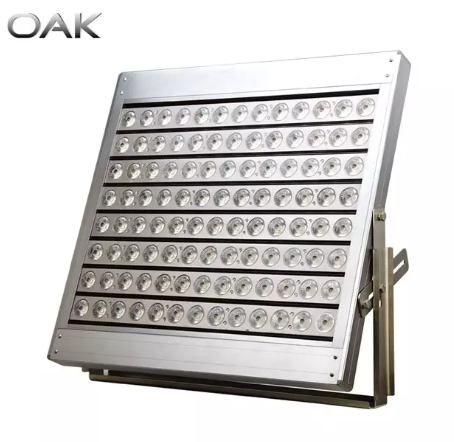
LED floodlights are the top choice for lighting basketball courts. These fixtures provide high-intensity, uniform illumination across large areas, ensuring visibility for players and spectators. Compared to traditional lighting systems, LED floodlights are more energy-efficient and have a longer lifespan, making them the optimal choice for both outdoor and indoor courts.
LED vs. Traditional Lighting
Traditional lighting systems, such as metal halide and halogen, have been widely used in sports venues but are becoming obsolete due to their high energy consumption and frequent need for replacement. LED floodlights, on the other hand, are more energy-efficient, require less maintenance, and provide brighter, more consistent light, making them a superior alternative. Switching to LED floodlights can save both energy and maintenance costs over time.
Feature | LED Floodlights | Traditional Lighting (Halogen/Metal Halide) |
Energy Efficiency | Highly energy-efficient | Less efficient, higher power consumption |
Lifespan | 50,000-100,000 hours | 10,000-15,000 hours |
Maintenance Cost | Low maintenance | High maintenance due to frequent replacements |
Light Quality | Bright, uniform lighting | Can be uneven, flickers, or dim over time |
Environmental Impact | Low, eco-friendly | High, emits harmful UV rays |
Design Considerations for Outdoor Basketball Courts
Fixture Placement and Layout
Pole Height and Placement
To achieve uniform lighting, it is crucial to install light poles at the correct height and position. Typically, outdoor basketball courts require poles between 20 to 40 feet tall. Proper placement helps ensure that the court is evenly lit without creating shadows or glare. The layout of the lighting system should cover the entire playing area and be positioned to avoid shining directly into players' eyes.
Asymmetrical vs. Symmetrical Lighting
There are two primary types of lighting arrangements: asymmetrical and symmetrical. Asymmetrical lighting directs the light to specific areas of the court, reducing spill light and glare. This is ideal for larger courts or areas with high ambient light. Symmetrical lighting, on the other hand, provides even distribution across the entire court and is typically used for smaller courts or areas with low ambient light.
Environmental Protection
For outdoor installations, it is important to ensure that LED floodlights are protected against environmental factors such as rain, dust, and extreme temperatures. Choosing LED fixtures with a high IP rating, such as IP65 or higher, ensures that the lights are weatherproof and can withstand the elements.
Energy Efficiency and Operating Costs
LED Benefits
LED floodlights offer significant energy savings compared to traditional lighting systems. Their superior efficiency allows for lower power consumption, which translates to reduced electricity costs. Additionally, LEDs last longer, which means fewer replacements and less maintenance. This results in long-term savings for basketball courts, making them an economical choice in the long run.
Smart Lighting Controls
Incorporating smart lighting controls, such as dimming systems and motion sensors, can further improve energy efficiency. These systems adjust the brightness based on usage, ensuring that the lights are only on when needed. Smart controls also allow for the scheduling of lighting, which can be especially useful for outdoor courts that are used during different times of the day or night.
Lighting Type | Initial Installation Cost | Energy Consumption (per hour) | Annual Energy Cost | Maintenance Cost per Year | Lifetime |
LED Floodlights | Moderate | Low | $200 | $50 | 50,000 hours |
Metal Halide | High | High | $500 | $150 | 10,000 hours |
Halogen | Low | Very High | $600 | $200 | 5,000 hours |
Design Considerations for Indoor Basketball Courts
Indoor Lighting Design
Glare-Free Lighting Solutions
Indoor basketball courts present unique lighting challenges due to reflective surfaces, such as polished floors and walls. Excessive glare can distract players and hinder their performance. LED floodlights with glare-reducing features, such as anti-glare lenses or diffusers, are essential to ensure optimal visibility and comfort for both players and spectators.
Lux and Uniformity Levels for Indoor Courts
For indoor basketball courts, ensuring that the lighting meets the proper lux levels is critical. FIBA standards recommend a minimum of 500 lux for amateur competitions and up to 2000 lux for professional or televised events. Additionally, the lighting should be uniform, with no shadows or variations in brightness. LED floodlights, with their ability to provide consistent illumination, are ideal for meeting these standards.
High-Bay LED Fixtures
High-bay LED fixtures are commonly used for indoor basketball court lighting. These lights are designed to be mounted high above the court, typically 20 to 30 feet, to ensure even illumination. High-bay LEDs are efficient, durable, and provide the necessary brightness for professional indoor courts.
Lighting for Basketball Courts: Cost Analysis and Budgeting
Cost of LED Basketball Court Lighting
Installation Costs
The initial cost of installing LED floodlights for a basketball court can be higher than traditional lighting systems. However, the long-term benefits far outweigh the upfront investment. The cost of installation includes the purchase of fixtures, poles, and wiring, as well as any labor costs associated with the setup.
Long-Term Savings
LED floodlights offer significant savings over time. Due to their energy efficiency, LEDs consume less electricity, reducing operating costs. Additionally, their long lifespan (up to 50,000 hours) means that they need to be replaced less frequently, saving money on maintenance and replacement costs.
Best Practices for Basketball Court Lighting Design
Maximizing Performance and Safety
Photometric Analysis
Before finalizing a lighting design, it’s essential to conduct a photometric analysis to ensure that the lighting meets the required lux levels and uniformity standards. This analysis uses specialized software to simulate light distribution and help determine the optimal placement and quantity of fixtures.
Lighting Controls for Customization
Smart lighting controls allow for the customization of lighting levels, providing flexibility for different events or times of day. Dimming systems can reduce energy consumption during non-peak hours, while motion sensors can ensure that lights are only on when needed.
Compliance with Regulations
To ensure that the lighting design meets safety and performance standards, it’s important to adhere to industry regulations. Organizations such as the Illuminating Engineering Society (IES) provide guidelines for basketball court lighting, including recommended lux levels, uniformity ratios, and glare control measures.
Conclusion
LED floodlights provide the best lighting solution for basketball courts, ensuring energy efficiency and durability. They offer consistent, bright illumination while cutting operational costs. By following this guide's best practices, basketball courts can be safely lit for both players and spectators. For top-tier lighting solutions, OAK LED offers high-quality LED floodlights that enhance performance and energy efficiency.
FAQ
Q: What are LED floodlights used for in basketball court lighting?
A: LED floodlights are ideal for providing uniform, bright illumination for both indoor and outdoor basketball courts. They ensure consistent visibility and performance, reducing energy costs over time.
Q: How many LED floodlights are needed for an outdoor basketball court?
A: The number of LED floodlights needed depends on the court's size and the required lux level. Typically, 4 to 6 floodlights are sufficient for recreational outdoor courts.
Q: What is the advantage of using LED floodlights over traditional lighting?
A: LED floodlights offer energy efficiency, long lifespan, and low maintenance compared to traditional halogen or metal halide lights. They provide superior lighting quality while reducing operational costs.
Q: Can LED floodlights be used for indoor basketball courts?
A: Yes, LED floodlights are excellent for indoor courts, providing bright, uniform lighting that enhances visibility and minimizes glare. High-bay LED fixtures are commonly used for indoor setups.
Q: Are LED floodlights energy-efficient for basketball courts?
A: Yes, LED floodlights are highly energy-efficient, consuming less power while providing bright, consistent lighting. This makes them a cost-effective solution for both commercial and residential basketball courts.


