Introduction
Outdoor lighting plays a crucial role in both security and visibility. But how do floodlights differ from security lights?
In this article, we’ll break down the differences between these two types of lights, focusing on LED floodlights and their specific use in outdoor security. By the end, you'll know which lighting solution fits your needs.
What is a Floodlight?
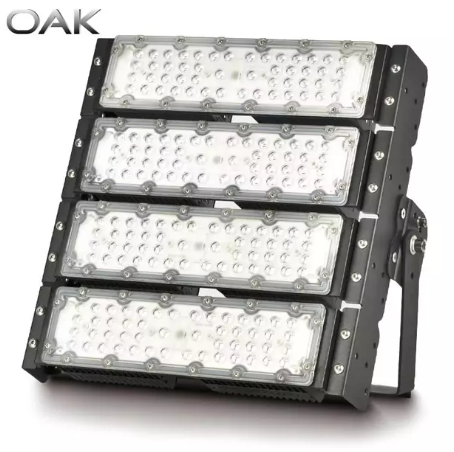
A floodlight is a powerful lighting fixture designed to illuminate a large area with a broad beam of light. Floodlights are commonly used in expansive outdoor spaces such as stadiums, parking lots, and industrial areas. They are designed for maximum visibility, often covering large zones to ensure no part of the space remains in the dark.
Floodlights are typically characterized by their high wattage and wide beam angle. These features make them ideal for spaces that require substantial illumination, such as outdoor events or commercial properties. Most modern floodlights, especially LED floodlights, are energy-efficient, offering bright light without consuming excessive power.
LED floodlights have gained popularity due to their long lifespan, low energy consumption, and ability to provide a high level of brightness. They are commonly used in areas that require constant or near-constant illumination, such as sports fields or large commercial properties.
What is a Security Light?
Security lights, on the other hand, are primarily designed to enhance safety by illuminating specific areas where intruders are likely to approach. Unlike floodlights, security lights are often equipped with motion sensors, timers, or dimmers to provide light only when needed. These features make security lights energy-efficient, as they can be set to turn on only when movement is detected, helping to save power and reduce utility costs.
Security lights can be installed in various configurations, such as wall-mounted fixtures, spotlights, or even integrated into smart home systems. They are often placed near entrances, doorways, or along pathways to deter potential intruders by making them feel visible.
Many security lights are available with adjustable features such as motion sensors, brightness control, and timers. These lights are ideal for homeowners who want to increase their property’s security without the need for constant illumination.
Key Differences Between Floodlights and Security Lights
Design and Functionality
One of the most noticeable differences between floodlights and security lights is their design and functionality. Floodlights are designed to provide broad, high-intensity illumination, making them ideal for large outdoor areas. They are often used for visibility in expansive spaces, such as parking lots, gardens, or stadiums.
In contrast, security lights focus on targeted lighting. These lights are more commonly used around entry points such as front doors, backyards, or driveways. Their main function is to illuminate specific areas and act as a deterrent for potential intruders. The motion-sensing capabilities of many security lights further enhance their effectiveness in improving safety.
Coverage Area
Another key difference lies in the coverage area. Floodlights are specifically designed to cover wide areas with a single light source, making them ideal for large open spaces. They provide comprehensive coverage, ensuring that every corner is illuminated.
Security lights, however, tend to focus on specific zones. They are designed to cover smaller areas, such as the front porch or backyard, to provide sufficient light for security purposes. These lights are not intended for general illumination but are better suited for specific applications, such as illuminating a path or entryway.
Energy Efficiency
In terms of energy usage, LED floodlights are generally more energy-efficient than traditional floodlights. They consume less power while providing the same level of brightness. This makes them an excellent choice for areas that require constant lighting, such as parking lots or security lighting around commercial properties.
On the other hand, security lights are often equipped with motion sensors and timers, allowing them to be more energy-efficient. These lights only turn on when motion is detected, which helps reduce electricity consumption and limits unnecessary lighting. Many security lights also use LED technology to further improve energy efficiency.
Installation and Maintenance
Floodlights typically require more complex installation, especially when they need to be mounted on high poles or structures. The installation process may involve additional equipment and expertise, especially for large-scale lighting systems. Furthermore, due to their high power output, floodlights may require more frequent maintenance, such as bulb replacements and cleaning, to ensure optimal performance.
Security lights, by contrast, are usually easier to install and maintain. Most models can be mounted on walls or fences without the need for specialized equipment. Additionally, since security lights are generally smaller and use less power, they require less frequent maintenance. Motion-sensor lights also have longer lifespans due to their energy-saving features, as they are not in use all the time.
Feature | Floodlights | Security Lights |
Coverage Area | Wide, for large outdoor areas | Targeted, for entry points or smaller spaces |
Energy Efficiency | Higher energy consumption, often constant | Energy-efficient with motion sensors |
Function | Provides consistent illumination | Activates when motion is detected |
Best Use | Stadiums, parking lots, large yards | Doorways, driveways, small gardens |
When to Choose a Floodlight vs. a Security Light?
Best Use Cases for Floodlights
Floodlights are best suited for large spaces where wide-area illumination is required. If you are looking to light up a stadium, parking lot, large backyard, or commercial property, floodlights are the optimal choice. Their high wattage and wide beam make them ideal for ensuring visibility in expansive areas.
They are also commonly used in events where bright, constant lighting is needed, such as concerts, sports games, or outdoor festivals. The key advantage of floodlights is their ability to provide consistent brightness over a large area, making them perfect for these types of environments.
Best Use Cases for Security Lights
Security lights, on the other hand, are better suited for smaller, more defined areas. If you want to increase the security of your home, especially around doorways, backyards, or driveways, security lights with motion sensors can provide peace of mind. These lights can be installed near entry points, fences, or along walkways to ensure that potential intruders are deterred by sudden illumination.
Additionally, security lights are an excellent choice for homes that require lighting only when necessary. With features like motion detection, security lights save energy by activating only when movement is detected, making them more efficient for residential properties.
Combining Both for Maximum Coverage
In many cases, a combination of both floodlights and security lights can offer comprehensive outdoor lighting. Floodlights can be used to light up large open areas like driveways or parking lots, while security lights can be placed around entry points to enhance safety and deter potential intruders. By using both types of lighting strategically, you can create a well-lit environment that enhances both visibility and security.
Application Area | LED Floodlights | Security Lights |
Residential | Large yards, driveways, gardens | Entryways, backyards, smaller outdoor spaces |
Commercial | Parking lots, stadiums, outdoor events | Near entrances, paths, garages |
Security | Illumination for large open areas | Deterrence with motion-sensing features |
Energy Efficiency | Best for high-use areas needing constant lighting | Ideal for areas requiring intermittent lighting |

How to Choose the Right Light for Your Space
When deciding between LED floodlights and security lights, it is important to consider several factors:
1. Size of the Area: If you are lighting a large space, floodlights are the better choice. For smaller spaces, such as around entrances or walkways, security lights are ideal.
2. Energy Efficiency: LED floodlights offer energy efficiency and long lifespans. For smaller, motion-triggered lighting, security lights with motion sensors can save energy by turning off when not needed.
3. Installation: Consider whether the lighting needs to be installed in a high or difficult-to-reach place. Floodlights may require professional installation, while security lights are usually easier to set up.
4. Security Needs: If you need to improve security, motion-sensor security lights are the best option. For larger, more visible areas, floodlights are ideal for deterrence.
Conclusion
Both LED floodlights and security lights are essential for outdoor lighting. Floodlights are ideal for large, open areas that need consistent brightness, while security lights provide targeted, energy-efficient illumination for entry points or smaller spaces. Understanding the differences can help you select the best solution for your space's security, energy efficiency, and size. OAK LED offers high-quality, durable lighting solutions that meet various needs, providing excellent value for both residential and commercial applications.
FAQ
Q: What is the main difference between a floodlight and a security light?
A: A floodlight provides broad, intense illumination for large areas, while a security light is designed for targeted, energy-efficient lighting, often with motion sensors for enhanced security.
Q: Why should I choose LED floodlights for outdoor lighting?
A: LED floodlights are energy-efficient, have a long lifespan, and provide bright, consistent illumination, making them ideal for large outdoor spaces like parking lots or stadiums.
Q: How do security lights differ from floodlights in terms of energy consumption?
A: Security lights typically use less energy as they are motion-activated, while LED floodlights may consume more power due to their continuous, wide-area lighting.
Q: Can LED floodlights be used for security purposes?
A: Yes, LED floodlights are great for security purposes as they illuminate large areas, enhancing visibility and deterring potential intruders in spaces like driveways and gardens.
Q: Are LED floodlights more cost-effective than traditional floodlights?
A: Yes, LED floodlights are more energy-efficient, leading to lower electricity bills and a longer lifespan, making them more cost-effective over time compared to traditional floodlights.
Q: How do I install a security light compared to a floodlight?
A: Security lights are usually easier to install, often with motion sensors and simpler wiring. LED floodlights may require more complex installation, especially for large areas or higher mounting.


